


Benedict’s Law Allergy Anaphylaxis Training for Schools Nurseries
Enquire About This Course
What is Benedict’s Law?
Benedict’s Law brings in new allergy safety rules for schools in England from September 2026. The law is named after five-year-old Benedict Blythe, who died from anaphylaxis at school in 2021. His family campaigned for stronger allergy protection in schools.
The government passed the law in February 2026. Schools now have to follow mandatory allergy guidance. This includes policies, training and emergency medication. The rules help staff identify and respond to serious allergic reactions.
What the New Law Means for Schools and Nurseries
From September 2026, schools must implement clear safety measures. These include a whole-school allergy policy, yearly allergy awareness training for staff, individual healthcare plans (IHPs) for students with serious allergies, and spare adrenaline auto-injectors on site.
The law does not cover private, voluntary, and independent nurseries at the moment. But following the same guidance is best practice to keep children safe. Research shows many schools lack these measures. This is why the law matters.
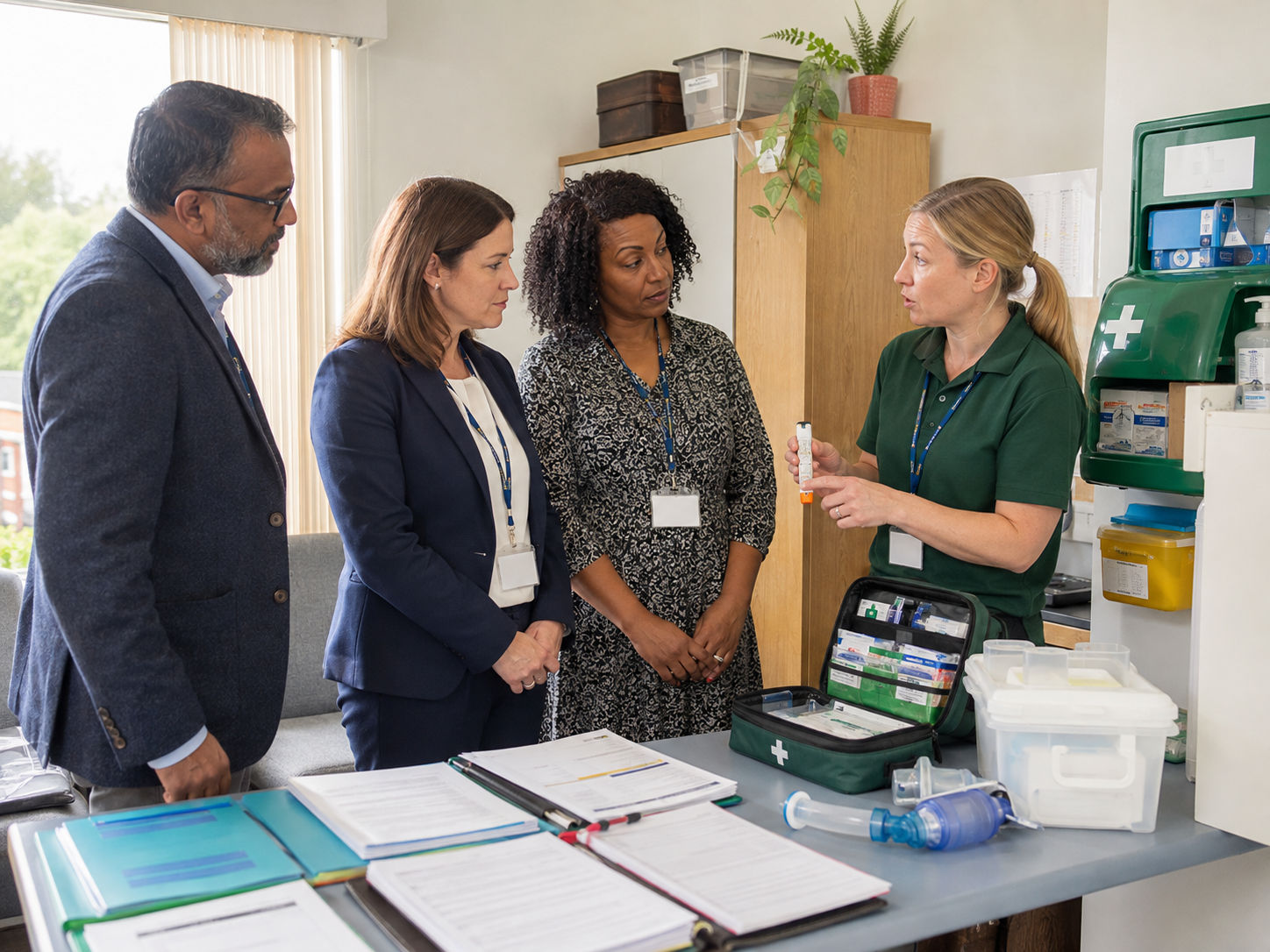
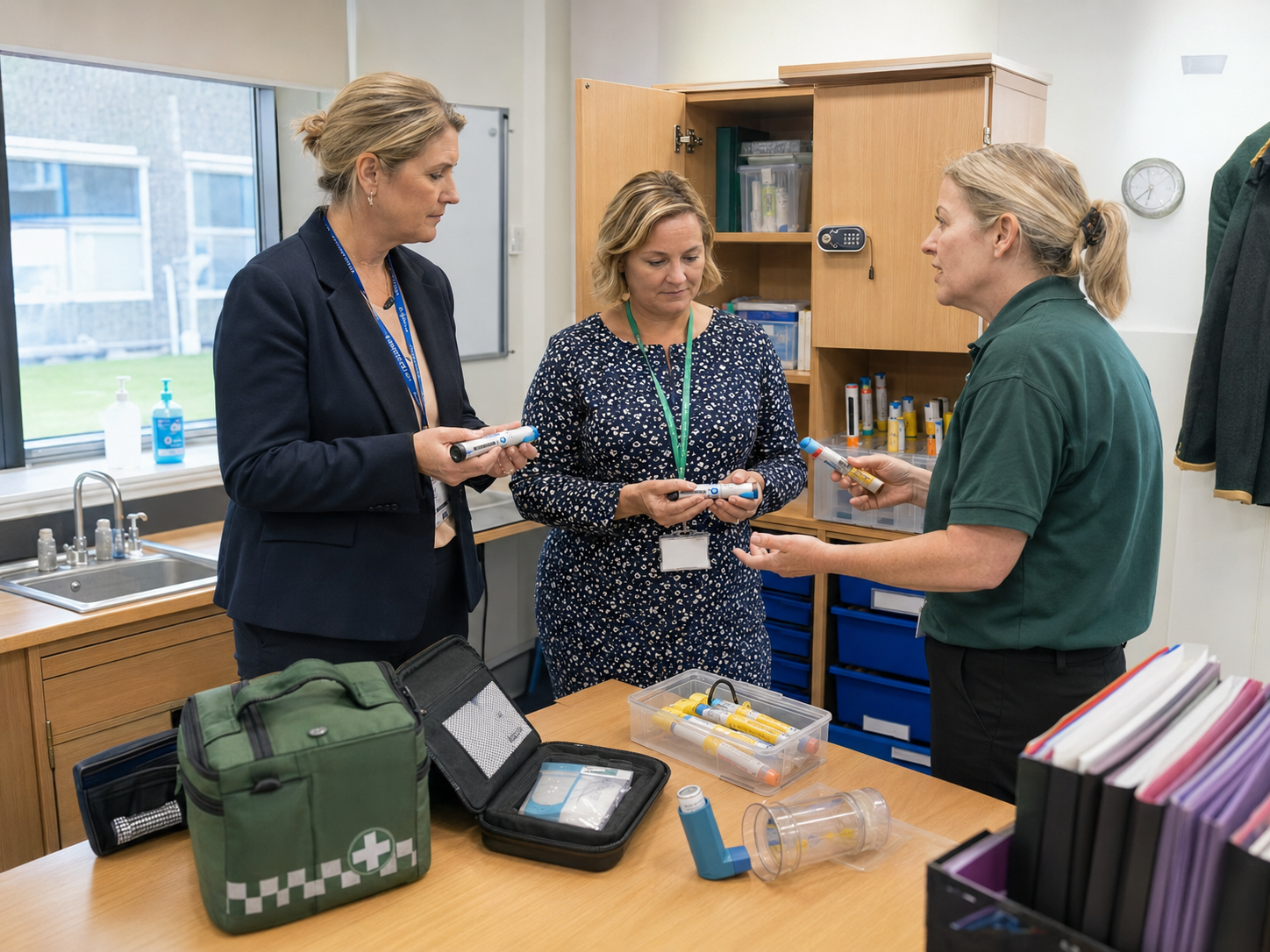
Your Legal Duties Under the New Rules
Schools must meet four key requirements.
- Whole-school allergy policy: Write and publish it on your website. Cover prevention, spotting signs, and emergency response.
- Staff training for everyone: All staff must complete allergy awareness training. This includes caretakers, lunchtime supervisors, and office staff.
- Spare medication: Keep in-date adrenaline auto-injectors on site. The guidance suggests stocking 2 to 4 pairs. They can be used on anyone having a reaction.
- Individual Healthcare Plans: Every student with a serious allergy needs a plan. This covers food and other severe allergies.
From 2027, the same measures will apply to all state schools, independent schools, and fee-paying special schools.
Who Needs Anaphylaxis and Asthma Awareness Training
Every adult working on school premises must complete this training. The law requires it.
Who needs this training:
- Teachers and teaching assistants
- Lunchtime supervisors
- Caretakers and site staff
- Office staff
- Minibus drivers
- Sports coaches
- Breakfast and after-school club staff
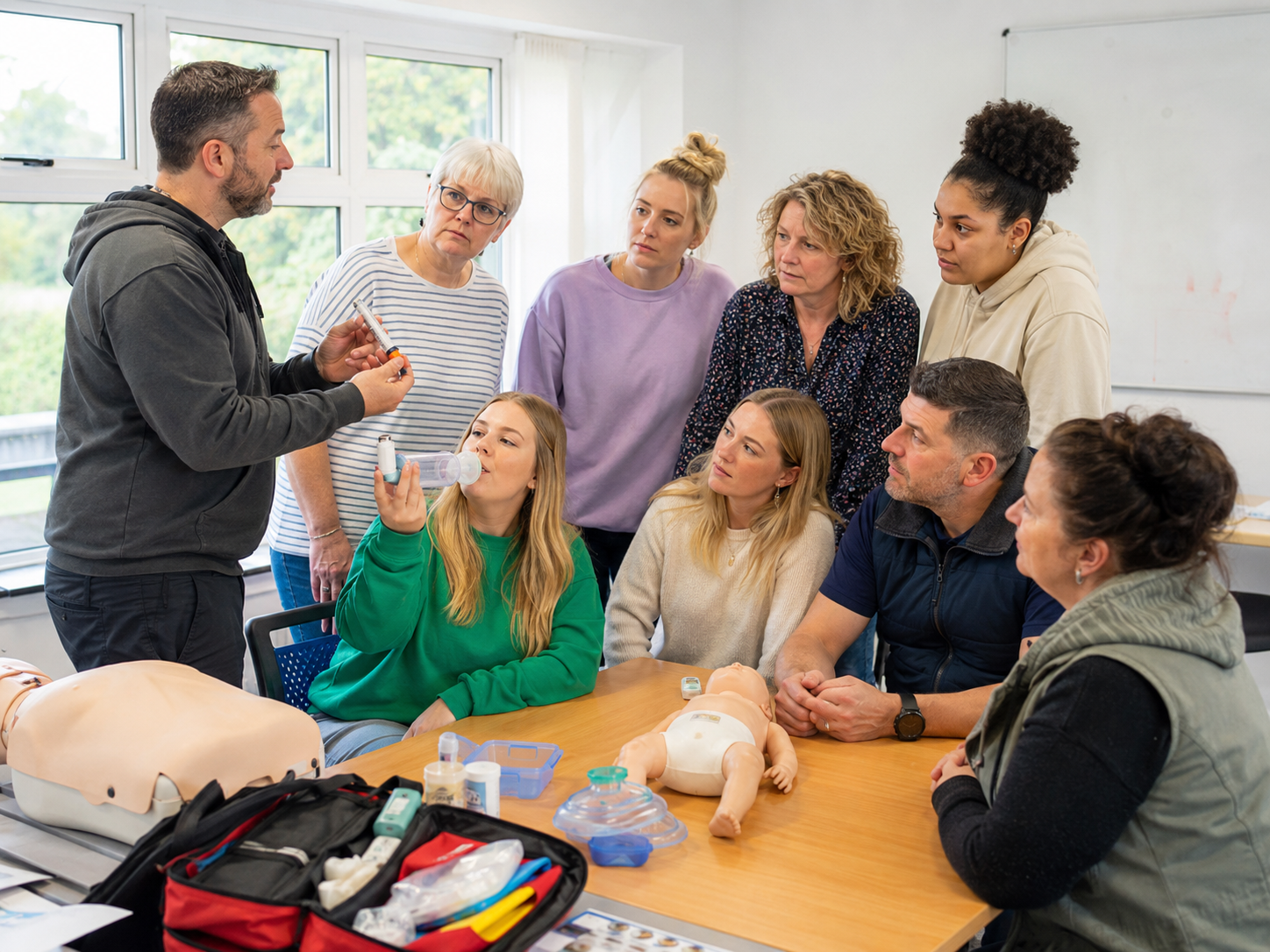
We provide on-site allergy and anaphylaxis & asthma awareness training for schools, nurseries, colleges, and childcare settings. Our practical sessions help staff understand their duties under Benedict’s Law.
Anaphylaxis training for schools teaches them to spot allergic reactions, use adrenaline auto-injectors, and respond quickly in an emergency. EpiPen training for schools shows them how to give adrenaline correctly. This gives staff confidence to act fast.
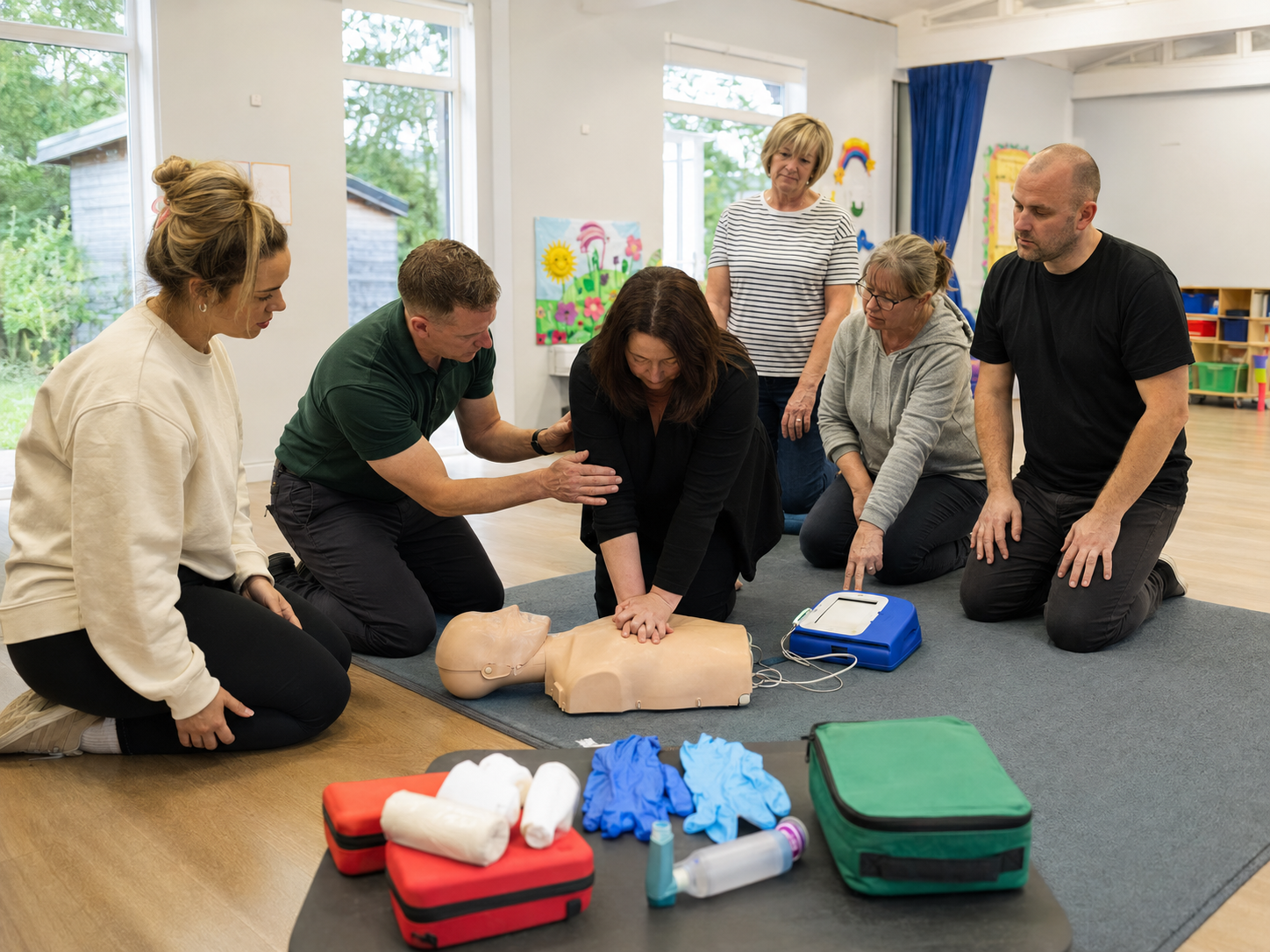
On-site First Aid Training in Cambridgeshire
We provide on-site first aid courses for schools and workplaces across Cambridgeshire. Our trainer comes to you. This saves time and cuts costs. Your business runs as normal.
You just need a suitable room. We bring all equipment, manuals, and training aids. We bring the classroom to you.
We are Ofqual-regulated with Qualsafe Awards. Our trainers are healthcare professionals. We have trained hundreds of school staff.
What you get:
- Trainers who arrive on time
- Sessions that fit your school day
- Practical training that builds confidence
- Certificates sent quickly
Your staff learn to recognise allergic reactions and respond with confidence.



Frequently Asked Questions
What is Benedict's Law?
It is a law for schools in England. It makes allergy safety a legal duty. Schools must have a policy, spare EpiPens, and trained staff. Allergy training for schools helps staff know how to spot and respond to a reaction.
How many staff should receive allergy awareness training?
All staff should have basic awareness of allergies and be able to recognise the signs of anaphylaxis. A designated first aider may not be on hand where a reaction could occur, such as on the playground or in the dining hall.
Are early years settings and independent schools included under the law?
The rules apply to independent schools and maintained nurseries linked to schools. However, private, voluntary and independent nurseries are currently outside the scope of these requirements.
Can schools use online courses to fulfil the training requirements?
Yes, online training that covers how to give adrenaline is compliant. The key point is that staff must practise with a trainer device. This builds their confidence for a real emergency.
What is the process for schools to purchase adrenaline auto-injectors?
Schools can buy them from high street or online pharmacies using a template letter on school-headed paper. Ask pharmacies for their best price. Schools may get the NHS price
Other First Aid and Safety Courses

Level 3 Award in First Aid At Work (RQF Approved)

Level 3 Award In Emergency Paediatric First Aid
